An AI FAQ should earn the right to answer customers through evidence from realistic tests. A polished demonstration is useful, but it rarely shows what happens when a shopper leaves out an order number, quotes an old returns policy or asks for an exception. The practical starting point is a narrow task with an agreed source, a responsible reviewer and a way to reach a person.
Consider a fictional retailer testing general returns questions. Its approved policy explains the standard eligibility conditions, the information needed for review and the customer-service contact. The first release answers questions about that published policy. It does not decide whether a specific order qualifies, issue a refund, change an order or promise an exception. These are different tasks and require their own processes and checks.
Write this boundary in language the whole team understands: the FAQ can explain the approved policy and tell the shopper how to request a review; a person decides exceptions and actions involving individual orders. If a proposed use case requires account access, payment or a connected business system, confirm that exact connection and action permission separately. A knowledge-based answer and a verified transaction are different pieces of evidence.
Starting small makes failures easier to interpret. If the FAQ is wrong about a return window, you can check the policy source, the instruction and the test in a manageable scope. When sales, returns, shipping, loyalty and account changes are launched together, a plausible response can hide which underlying task is unreliable. Expand after the initial scope has a repeatable acceptance process, rather than because the system can produce a response to every question.

Testing cannot repair an unresolved source. If the website says one thing and an internal document says another, decide which version is authoritative before using either as the answer reference. Give the source an owner and a review date, and remove obsolete material from the test knowledge set. Keep the original files for history, but distinguish them from the documents intended to guide current answers.
Read the policy as a customer would. Does it explain which products or situations are excluded? Does it distinguish an ordinary return from a damaged item or a delivery problem? Does it give a route for an individual decision? A short document can be complete enough for a narrow FAQ. A large collection can still be incomplete if it lacks these distinctions.
Use the same approved terminology in your instructions and expected answers. A customer may call a return a refund or exchange; those terms are not necessarily interchangeable in the business process. Include common ways of asking the question without changing the policy meaning. Avoid inserting personal order details into a general policy document just to make a demonstration feel realistic.
imBee's public AI Agent page describes knowledge inputs and a testing workflow. The operational question for your team is which approved source is available to the configured agent, how updates enter that setup and who reviews the resulting answers. Confirm the exact deployment and connected actions for your account before treating this editorial checklist as an implementation specification.
| Source issue | Preparation | Evidence to retain |
|---|---|---|
| Two policy versions | Choose the approved current version | Owner and version reference |
| Missing exception route | Add the real review process | Contact and opening-hours wording |
| Ambiguous refund wording | Separate explanation from approval | Approved answer and decision boundary |
| Changed policy | Replace the active source and retest | Change record and new results |
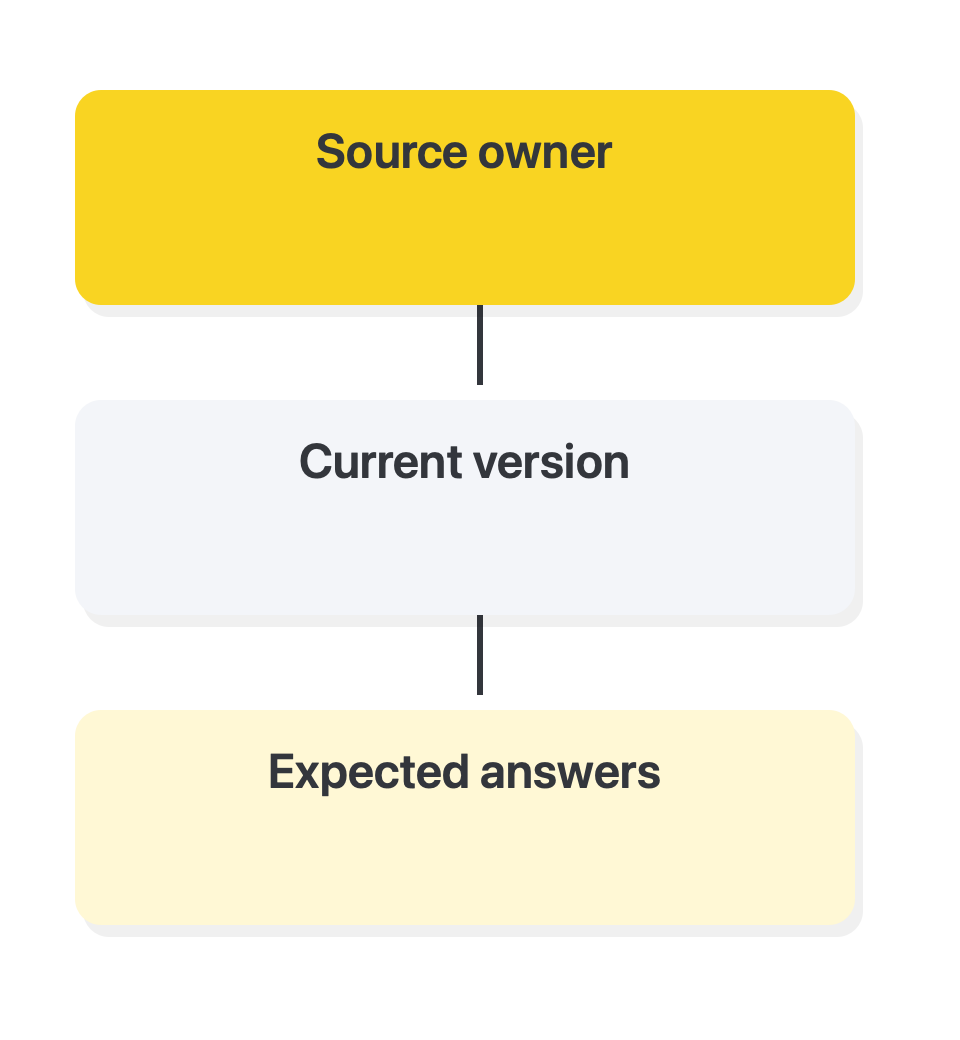
A useful test set includes the questions your team expects and the questions that are difficult to answer responsibly. Pair each question with the approved source and a written expected outcome. Sometimes that outcome is a direct explanation. Sometimes it is a clarification question or a transfer to a person. Both can be correct responses.
For the fictional returns FAQ, begin with an ordinary question about the process. Add a question with missing facts, a question that asks for an exception and a question quoting an outdated policy. Include a shopper who explicitly asks to speak with someone. These cases test whether the boundary survives changes in wording and pressure, rather than only whether the agent can repeat a paragraph.
Keep test inputs free of real customer identifiers. Fictional order references and invented messages are sufficient to examine the conversation flow. If later evaluation uses real service records, define the data handling, access and review process first. Do not move customer conversations into a general test library by default.
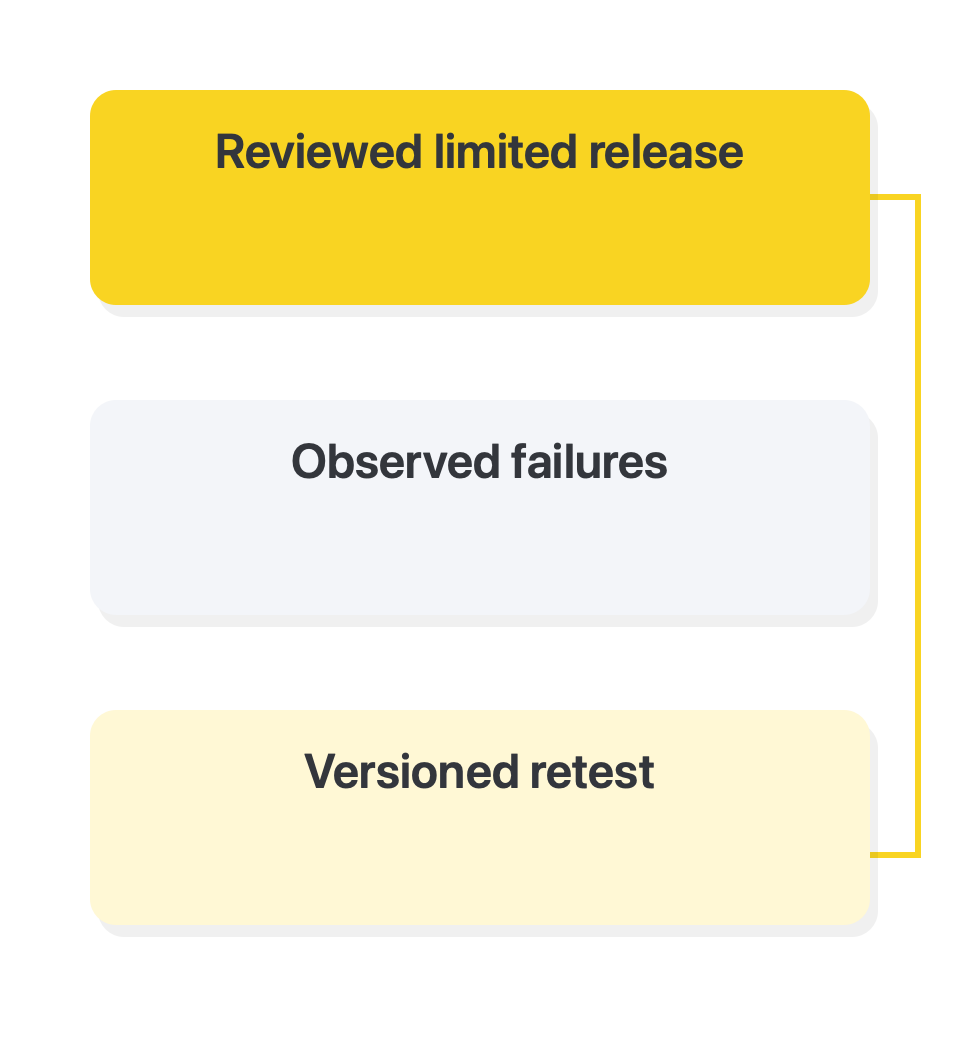
Run important questions more than once and include alternative phrasings. The aim is to see whether the expected behavior is stable enough for the defined task, not to select the best-looking response from several attempts. Save unsuccessful results as well as successful ones. A test history that records only passes conceals exactly the exceptions the team needs to improve.
| Test question | Expected behavior | Reason |
|---|---|---|
| How do I request a return? | Explain the approved steps | Routine policy question |
| Can I return this order? | Ask for needed context or route to review | Individual eligibility is unresolved |
| Your old page allowed this | Use current approved wording and escalate the conflict | Conflicting source |
| Make an exception for me | Transfer to the responsible team | No invented approval |
| I want a person | Offer the actual human route | Respect explicit handover request |

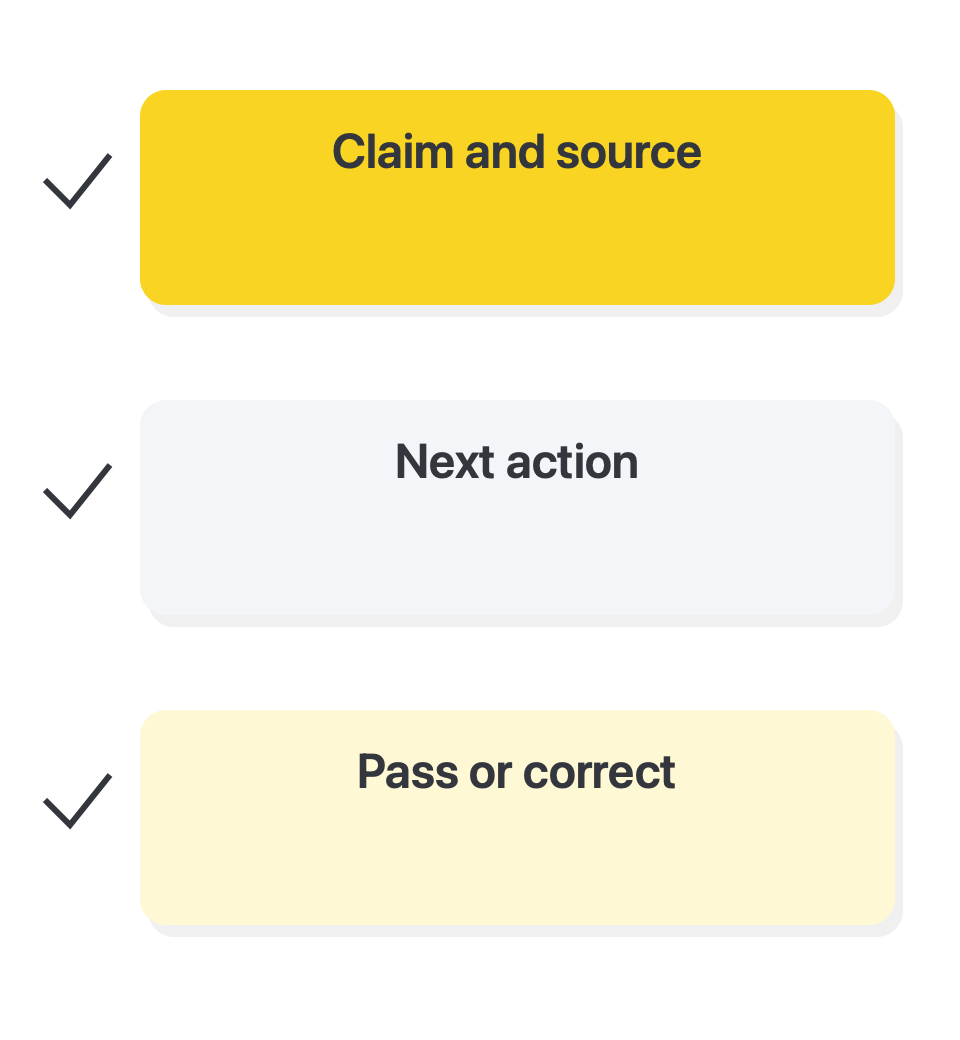
An answer can be readable and still fail the test. Review the claim, its source, the completeness of the instructions and the next step the customer is offered. Ask whether the response turns uncertainty into an unsupported promise, suggests an action that has not happened or leaves the customer without a usable route forward.
For example, explaining how to submit a return request is different from saying that the return has been approved. A response should not imply that a refund was processed simply because the customer asked for one. If the agent is connected to an action-taking system, test the actual operation, authorization and result separately from the message describing it. The scope of this guide remains a general FAQ, not an automated refund process.
Define critical failures before reviewing the outputs. An invented policy exception, false claim of an order change or missing human route should block that question from release. Minor wording can be edited without disguising a critical error. The reviewer should be able to point to the exact expected outcome and explain why the result passes or fails.
A simple review sheet is usually enough: test question, source version, result, pass or fail, reason, correction and retest. Retain the version of the instructions used for the run. Without that reference, a later improvement or regression becomes hard to attribute. Do not turn a pass percentage into a customer outcome; it describes only the defined test set.
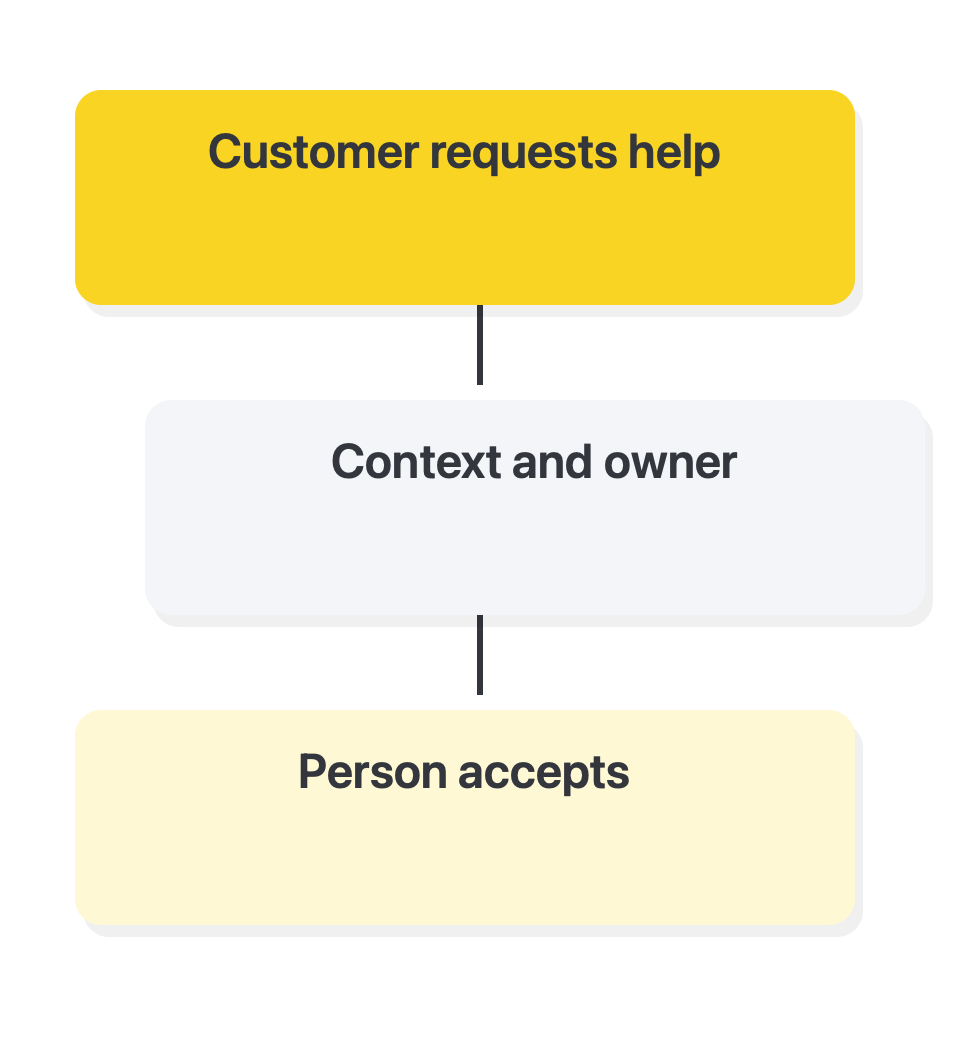
A button labelled 'talk to someone' is only the start of a handover. Test where the request goes, which person or queue owns it and what happens when that team is unavailable. The customer should receive an accurate explanation of the next step. Do not promise an immediate reply if the team cannot provide one.
Give the receiving person enough context to continue: the question, what the FAQ already explained and the reason for escalation. Separate facts supplied by the customer from assumptions made by automation. For a returns exception, the team might need to request an order reference through its approved process. The FAQ should not invent that reference or require sensitive payment details just to ask for help.
Use a fictional scenario to test the whole path with staff. Ask for a person, follow the actual route and confirm that the receiving team can find the conversation. Then test outside opening hours and during an unassigned state. Decide how the request remains visible until someone accepts it. This is an operational rehearsal, not a promise that every channel or integration behaves identically.
imBee's public inbox materials describe assignment and team collaboration. Verify how those functions are configured for your selected channel and account. A documented feature does not prove that your queue, permissions and availability messages are configured correctly. Acceptance should include the customer's view and the receiving team's view.
Release only the questions that have passed the agreed review. Keep unresolved topics on a visible list and direct them to the appropriate team. Tell operators what the FAQ covers, where its sources live and how to report a wrong answer. A narrow release with a known fallback is easier to support than a broad launch whose boundaries exist only in an internal document.
Choose a monitoring routine that reflects the actual task. Review incorrect policy claims, unanswered questions, incomplete handovers and repeated customer confusion. A large number of automated replies does not establish resolution. A team should examine whether customers obtained a correct answer or reached a person who could complete the request, using its own definitions and records.
Every policy update should trigger the same saved test set. Add a new test when a real failure reveals a missing scenario. Record the source version, instruction change and review result. This turns isolated corrections into a growing regression library. Avoid silently rewriting historical results; keep the old run and append the new decision.
Before expanding to another language, check that the approved policy meaning survives translation. Native wording should be readable and preserve exclusions, uncertainty and escalation conditions. A translated navigation label is not a translated knowledge base, and a localized page does not demonstrate an approved customer-service deployment. Review the actual response in each language you intend to use.
The practical completion point is a tested task, an approved knowledge set, an accepted human route and a repeatable change process. Faster handling or better customer outcomes are goals to measure after use, not numbers this checklist can guarantee.
No. Begin with one question family backed by an approved source and a responsible owner. Add topics after their expected answers, exceptions and handover route have been reviewed.
The FAQ should ask only for the information the approved process needs, or direct the customer to a person. It should not invent order status or eligibility.
Explaining a policy does not approve a refund. Any real transaction requires a separately confirmed process, permissions and verification of the outcome.
The request reaches the intended person or queue, the receiving team has usable context and the customer sees an accurate next step. Test unavailable-team cases too.
Repeat important routine, incomplete, conflicting and escalation questions, with alternative phrasing. Keep failures and run the set again after source or instruction changes.
No. It describes only the test set. Customer resolution needs a separate definition and evidence from actual service operations.
Reuse the method, then review the translated policy, response wording and escalation instructions in that language. Do not assume that a translated page proves a ready deployment.
Mulai uji coba gratis 30 hari Anda hari ini. Tingkatkan produktivitas tim Anda lebih dari 30% dan bawa bisnis Anda ke tingkat kesuksesan yang lebih tinggi.